What Is Crypto Tokenization? How Real-World Assets Are Moving On-Chain
What Is Crypto Tokenization
The cryptocurrency industry is expanding beyond Bitcoin and traditional digital coins. One of the most interesting developments is crypto tokenization, a process that can represent real-world assets on a blockchain.
From real estate and government bonds to commodities and artwork, tokenization could change how certain assets are owned, transferred, and managed.
But what exactly is crypto tokenization, and why are financial institutions paying attention to it?
What Is Crypto Tokenization?
Crypto tokenization is the process of creating a digital representation of an asset on a blockchain.
The underlying asset can be a physical item, financial instrument, or another type of real-world value.
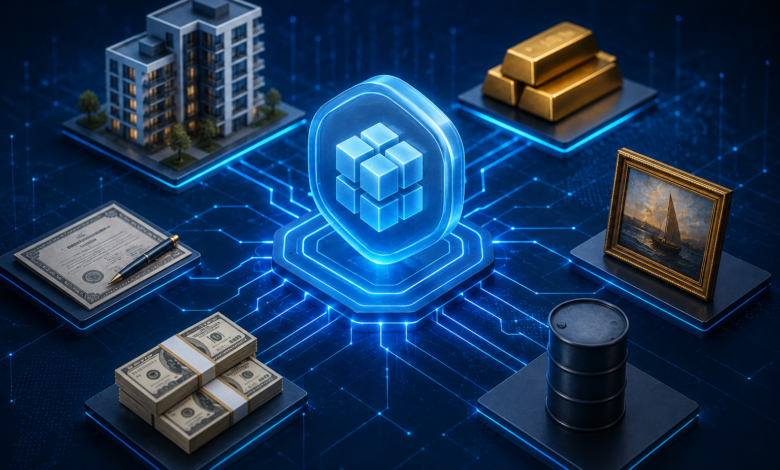
For example, a token could represent an interest in:
- Real estate
- Government bonds
- Corporate debt
- Gold
- Artwork
- Commodities
- Investment funds
Instead of relying entirely on traditional databases and paperwork to represent ownership or rights, blockchain technology can provide a digital record that can be transferred and verified through a blockchain network.
What Are Real-World Assets?
Real-world assets, often shortened to RWAs, are assets that exist outside the cryptocurrency ecosystem.
Examples include physical property, financial securities, commodities, and other traditional investments.
When these assets are tokenized, information about ownership or economic rights can be represented digitally.
This does not necessarily mean that the physical asset itself is stored on a blockchain. Instead, the blockchain generally records the token and its associated ownership or contractual rights.
How Does Asset Tokenization Work?
The exact process depends on the asset and the legal structure behind the token.
A simplified tokenization process may look like this:
Real-World Asset → Legal Structure → Digital Token → Blockchain → Investor or User
For example, imagine a company wants to tokenize a portfolio of real estate.
The company could establish a legal entity that owns the properties. Digital tokens could then represent certain rights connected to that entity.
Those tokens can be issued on a blockchain and potentially transferred between eligible participants.
The legal agreement behind the token is extremely important because the blockchain token itself does not automatically create ownership of a physical asset.
Why Is Crypto Tokenization Important?
Traditional financial assets can involve multiple intermediaries, paperwork, settlement systems, and administrative processes.
Tokenization could potentially make some parts of this process more efficient.
Potential advantages include:
Faster Settlement
Blockchain-based transactions can potentially reduce the time needed to transfer certain digital representations of assets.
Greater Transparency
Public blockchains can provide transaction records that are easier to verify than some traditional systems.
Fractional Ownership
Tokenization may allow certain assets to be divided into smaller digital units.
For example, instead of purchasing an entire property, an investment structure could allow eligible investors to gain exposure to smaller portions of an asset.
However, fractionalization depends on the legal and financial structure of the specific project.
Programmable Assets
Blockchain-based tokens can potentially use smart contracts to automate certain actions.
For example, a tokenized financial product could be programmed to distribute payments according to predefined rules.
Broader Access
Tokenization could potentially make some financial assets accessible to a wider range of investors.
However, access remains subject to local regulations, investor eligibility requirements, and the structure of each offering.
Tokenized Real Estate
Real estate is one of the areas frequently discussed in connection with tokenization.
Property transactions traditionally involve contracts, title records, intermediaries, banks, and other administrative processes.
A tokenized real-estate structure could represent ownership interests or economic rights through blockchain-based tokens.
One potential benefit is fractional participation.
Instead of requiring one investor to purchase an entire property, a project could theoretically divide the economic interest into many digital units.
However, investors need to understand exactly what a token represents.
Owning a token does not automatically mean owning a legal share of a building. The rights depend on the legal documents and structure supporting the token.
Tokenized Bonds and Government Debt
Financial institutions have also explored tokenized bonds and other debt instruments.
A tokenized bond can represent an underlying debt security through blockchain infrastructure.
Potential benefits may include more efficient issuance, settlement, record keeping, and transfer.
Government bonds are particularly interesting because they already represent established financial instruments.
Tokenization can add a blockchain-based layer to how these assets are issued and managed.
Tokenized Gold and Commodities
Another application involves commodities such as gold.
A digital token can be designed to represent a claim associated with a certain amount of physical gold held by a custodian.
This can allow users to interact with a blockchain-based representation rather than directly handling physical gold.
However, the key question is always whether the underlying commodity actually exists and whether the token holder has enforceable rights to it.
Independent verification, custody arrangements, and legal documentation therefore matter.
What Role Do Smart Contracts Play?
Smart contracts are programs deployed on blockchain networks that automatically execute predefined instructions.
In tokenization, smart contracts can be used to manage various functions associated with digital assets.
Depending on the project, smart contracts may help with:
- Token issuance
- Transfers
- Ownership records
- Automated payments
- Compliance rules
- Access restrictions
- Redemption mechanisms
Smart contracts can reduce manual processes, but they are not risk-free.
Programming errors, vulnerabilities, incorrect configurations, or problems with external data sources can create significant risks.
Benefits of Crypto Tokenization
Crypto tokenization has attracted interest because it combines traditional assets with blockchain infrastructure.
Some potential benefits include:
Improved Efficiency
Blockchain systems may reduce certain administrative and settlement processes.
Greater Transparency
Transaction histories can be easier to verify when blockchain records are publicly accessible.
Fractionalization
Assets can potentially be divided into smaller units, subject to applicable laws and the project’s structure.
Programmability
Smart contracts can automate specific financial or ownership-related functions.
24/7 Infrastructure
Blockchain networks generally operate continuously rather than following traditional market hours.
This could support around-the-clock transfer and settlement for certain tokenized assets.
What Are the Risks of Tokenization?
Despite its potential, tokenization is not without risks.
Legal Risk
A token’s legal rights depend on the contracts and laws governing the project.
A blockchain transaction does not automatically establish legal ownership of an underlying physical asset.
Regulatory Risk
Tokenized assets can fall under financial regulations depending on their structure and jurisdiction.
Rules can also change as governments develop new approaches to digital assets.
Custody Risk
If a token represents a physical asset, someone must usually hold and manage the underlying asset.
Poor custody practices can undermine the value of the token.
Smart Contract Risk
A vulnerability in a smart contract could potentially result in financial losses.
Liquidity Risk
Tokenizing an asset does not guarantee that there will be buyers and sellers.
A token may technically be transferable while still having limited market liquidity.
Counterparty Risk
Some tokenized assets depend on companies, custodians, issuers, or other intermediaries.
If one of these organizations fails to fulfill its responsibilities, token holders could be affected.
Is Tokenization the Same as Cryptocurrency?
No.
Cryptocurrencies such as Bitcoin are native digital assets that exist directly on blockchain networks.
A tokenized real-world asset is different because it represents an asset, right, or financial interest connected to something outside the blockchain.
For example, Bitcoin exists natively on its blockchain, while a tokenized bond is designed to represent rights associated with an underlying bond.
Why Are Financial Institutions Interested in Tokenization?
Banks, asset managers, and other financial institutions have shown increasing interest in blockchain-based financial infrastructure.
One reason is the possibility of improving existing processes.
Traditional financial markets can involve multiple systems that need to communicate with each other.
Tokenization could potentially combine asset records, transactions, and settlement processes within blockchain-based infrastructure.
Institutions are also interested in areas such as:
- Faster settlement
- Operational efficiency
- Automated compliance
- Improved record keeping
- Fractional ownership
- New financial products
However, widespread adoption depends on regulation, technology, interoperability, liquidity, and investor demand.
What Could the Future of Tokenization Look Like?
The future of tokenization is still developing.
In the coming years, more financial institutions and technology companies may experiment with blockchain-based representations of traditional assets.
Tokenized funds, bonds, real estate, commodities, and other financial instruments could become more common if regulatory frameworks and market infrastructure continue to mature.
At the same time, tokenization is unlikely to eliminate traditional financial institutions completely.
Banks, custodians, legal entities, regulators, exchanges, and other organizations may continue playing important roles.
The blockchain may simply become another layer of financial infrastructure.
Final Thoughts
Crypto tokenization connects traditional assets with blockchain technology by creating digital representations of real-world assets or financial rights.
The concept has the potential to improve settlement, transparency, fractional ownership, and financial automation. However, tokenization does not remove traditional investment risks.
Before considering any tokenized asset, investors should understand what the token represents, who controls the underlying asset, what legal rights are provided, how the asset is stored, and whether there is sufficient liquidity.
Tokenization is still an evolving part of the digital-asset industry, but its development could play an important role in how traditional and blockchain-based finance interact in the future.
Frequently Asked Questions
What is crypto tokenization?
Crypto tokenization is the process of representing a real-world asset or financial right as a digital token on a blockchain.
What are examples of tokenized real-world assets?
Examples include real estate, government bonds, corporate debt, gold, commodities, artwork, and investment funds.
Does a tokenized asset mean I legally own the physical asset?
Not necessarily. Legal ownership depends on the structure, contracts, and regulations governing the tokenized asset.