Crypto Wallet vs Exchange: Where Should You Keep Your Cryptocurrency?
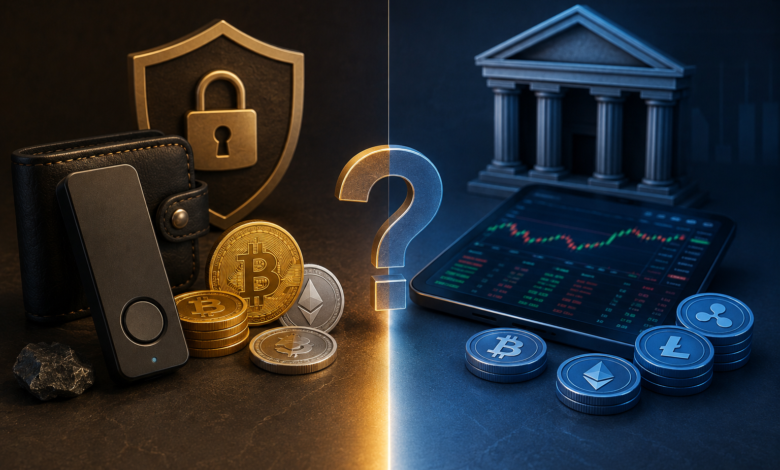
Crypto Wallet vs Exchange: Where Should You Keep Your Cryptocurrency?
Buying cryptocurrency is only the beginning. After purchasing Bitcoin or another digital asset, one of the most important decisions is where to keep it.
Many beginners ask the same question: Should I keep my crypto on an exchange or move it to a wallet?
The answer depends on how you plan to use your cryptocurrency, how much you hold, and how comfortable you are managing your own security.
Understanding the difference between a crypto wallet vs exchange can help you make a more informed decision.
What Is a Crypto Wallet?
A crypto wallet is a tool that allows you to manage cryptocurrency and interact with blockchain networks.
Most cryptocurrency wallets do not literally store coins inside the device or application. Instead, they help you manage the cryptographic keys that provide access to your blockchain assets.
Crypto wallets generally fall into two broad categories:
- Hot wallets
- Cold wallets
Each type has different advantages and risks.
What Is a Cryptocurrency Exchange?
A cryptocurrency exchange is a platform where users can buy, sell, trade, and sometimes store digital assets.
When you purchase Bitcoin through an exchange, the platform may hold the associated private keys on your behalf.
This can make cryptocurrency convenient to access, particularly for beginners.
However, keeping funds on an exchange means relying on that company to protect your assets and maintain access to your account.
Crypto Wallet vs Exchange: The Main Difference
The biggest difference comes down to control.
With a self-custody crypto wallet, you generally control the private keys or recovery credentials associated with your assets.
With an exchange account, the exchange typically controls the underlying wallet infrastructure while you access your assets through your account.
This is why the crypto community often emphasizes the principle of controlling your own keys.
However, self-custody also creates responsibility. If you lose your recovery phrase or expose it to someone else, recovering the funds may be extremely difficult or impossible.
Hot Wallets Explained
A hot wallet is a cryptocurrency wallet connected to the internet.
Examples can include mobile apps, desktop wallets, and browser-based wallets.
Hot wallets are popular because they make it relatively easy to send, receive, and interact with cryptocurrency applications.
Advantages of hot wallets
- Convenient for everyday transactions
- Easy to access
- Usually simple to set up
- Useful for interacting with decentralized applications
- Suitable for smaller amounts intended for active use
Risks of hot wallets
Because they are connected to the internet, hot wallets can be exposed to phishing attacks, malware, malicious websites, and other online threats.
Users also need to protect their recovery phrases and devices carefully.
Cold Wallets Explained
A cold wallet is a method of keeping cryptocurrency keys offline.
Hardware wallets are a common example.
Because the keys can remain isolated from an internet-connected environment, cold storage is often considered a strong option for people who want to hold cryptocurrency for longer periods.
Advantages of cold wallets
- Private keys can remain offline
- Reduced exposure to many online attacks
- Suitable for long-term storage
- Provides greater control over self-custody
Potential disadvantages
- Usually less convenient for frequent transactions
- The device can be lost or damaged
- Users must carefully protect recovery information
- There can be a learning curve for beginners
Cold storage does not eliminate every risk. Physical theft, scams, compromised recovery phrases, and user mistakes can still result in losses.
Why Do People Keep Crypto on Exchanges?
Cryptocurrency exchanges can be convenient for active traders.
If someone frequently buys and sells digital assets, keeping funds on an exchange can make transactions faster and easier.
Exchanges may also provide features such as:
- Trading pairs
- Market orders
- Limit orders
- Portfolio tracking
- Recurring purchases
- Conversion between different digital assets
For beginners, an exchange can provide a familiar interface for entering the cryptocurrency market.
However, convenience comes with a trade-off: users depend on the exchange’s security systems, policies, and continued operation.
The Risks of Keeping Crypto on an Exchange
Keeping cryptocurrency on an exchange introduces several types of risk.
Exchange Security Risk
Cryptocurrency platforms can become targets for hackers and other criminals.
A security incident could potentially affect customer funds, depending on the circumstances and the platform’s safeguards.
Account Access Risk
If an attacker gains access to your exchange account, they may attempt to move or sell your assets.
Using a strong, unique password and multi-factor authentication can help protect your account.
Platform Risk
An exchange can experience operational problems, regulatory restrictions, liquidity issues, or other disruptions.
Users should understand the terms and protections associated with the platform they use.
The Risks of Self-Custody
Self-custody provides greater control, but it also means greater responsibility.
If you manage your own wallet, you become responsible for protecting the credentials needed to access your cryptocurrency.
Common self-custody mistakes include:
- Sharing a recovery phrase
- Storing recovery information in an insecure location
- Clicking phishing links
- Installing malicious wallet software
- Sending cryptocurrency to the wrong address
- Losing access to recovery information
Unlike a traditional bank account, cryptocurrency transactions generally cannot simply be reversed because a user made a mistake.
What Is a Recovery Phrase?
A recovery phrase, sometimes called a seed phrase, is a sequence of words used to restore access to a compatible cryptocurrency wallet.
It is extremely sensitive information.
Anyone who obtains the recovery phrase may potentially gain control of the assets associated with that wallet.
You should never share your recovery phrase with another person, including someone claiming to be customer support.
It should not be entered into random websites, forms, or messages.
Should Beginners Use a Crypto Wallet or Exchange?
For beginners, an exchange can be easier to understand because it provides a familiar account-based experience.
However, learning about self-custody is also valuable if you plan to hold cryptocurrency for a longer period.
A practical approach is to learn how wallets work before transferring significant amounts of cryptocurrency.
Start with a small amount if you are learning how to send and receive assets. Double-check wallet addresses and network information before confirming transactions.
Crypto Wallet vs Exchange: Which Is Safer?
There is no universal answer.
An exchange may be convenient and can provide security features such as multi-factor authentication, withdrawal controls, and account monitoring.
A self-custody wallet can give users direct control over their assets, but mistakes involving private keys or recovery phrases can be devastating.
The safer option depends partly on how well the user understands and manages security.
An exchange may make sense for:
- Active traders
- Frequent buyers and sellers
- Small amounts used for regular transactions
- Beginners who are still learning about wallets
A self-custody wallet may make sense for:
- Long-term holders
- Users who want direct control
- People comfortable managing recovery information
- Cryptocurrency users who interact with decentralized applications
For larger holdings, some users combine approaches by keeping a limited amount on an exchange for active use while storing longer-term holdings using self-custody.
How to Protect Your Cryptocurrency
Regardless of where you keep your crypto, basic security practices are important.
Use Strong Authentication
Use a unique password for your exchange account and enable multi-factor authentication whenever available.
Protect Your Recovery Phrase
If you use a self-custody wallet, protect your recovery phrase from unauthorized access.
Do not send it through email, social media, messaging apps, or cloud documents.
Beware of Phishing
Scammers frequently create fake websites, applications, messages, and customer-support accounts designed to steal cryptocurrency credentials.
Always verify the website or application before entering sensitive information.
Verify Transactions
Before sending crypto, carefully check the recipient address and blockchain network.
A transaction sent to the wrong address or network may not be recoverable.
Keep Software Updated
Use legitimate wallet applications and keep your devices and security software updated.
Can You Move Crypto From an Exchange to a Wallet?
Yes. Many cryptocurrency exchanges allow users to withdraw supported assets to an external wallet.
The general process is:
- Set up a compatible wallet.
- Copy the receiving address.
- Open the withdrawal section of the exchange.
- Select the cryptocurrency and correct network.
- Enter the wallet address.
- Carefully verify the details.
- Confirm the withdrawal.
Always check the supported network before sending funds. Different blockchain networks can have different requirements, and choosing an incompatible network can create serious problems.
For larger transfers, some users first send a small test transaction before moving the remaining amount.
Final Thoughts
The crypto wallet vs exchange debate is really about the balance between convenience and control.
Exchanges can make buying and trading cryptocurrency simple, while self-custody wallets give users greater direct control over their assets.
Neither option is automatically perfect for everyone.
If you choose an exchange, focus on account security and understand the platform’s policies. If you choose self-custody, take responsibility for protecting your private keys and recovery phrase.
Most importantly, never treat cryptocurrency security as an afterthought. A few careful habits can make a significant difference in protecting your digital assets.
Frequently Asked Questions
Is a crypto wallet safer than an exchange?
It depends on the wallet, exchange, and user’s security practices. Self-custody provides greater control but also places responsibility for security on the user.
Is it okay to keep crypto on an exchange?
It can be convenient, particularly for active trading and smaller amounts. Users should understand the risks and use strong account security.
What is the safest place to store crypto long term?
Many long-term holders consider properly managed cold storage a strong option, but security ultimately depends on how private keys and recovery information are protected.
What happens if I lose my crypto wallet?
If you have securely backed up the wallet’s recovery information, you may be able to restore access using a compatible wallet. Without the necessary recovery information, access may be permanently lost.